Monday, July 7, 2014

WHAP 2013-2014!!  

After some well-deserved summer rest and fun, I've finally made it back to the website.  Last year certainly ranked among the best in terms of the quality and character of students I've had the privilege of teaching in my 8 years at WHS.  Thank you so much for all of your dedication and energy.  It does not go unnoticed and I hope that you valued as much from the challenge as I did.  I mean seriously, "WE ALMOST DIED!"  Congratulations to all who completed their first AP Test!  While we did not get that first 5:(  we did double the amount of 4's from last year and increased the average AP score considerably.  I'm proud of you!  As you'll hear from Mr. Bill a number of times next year, test scores does not a good student make.  When I remember you all, it will not be your AP scores but the incredible improvement as critical and analytic students, your hard work and determination to master material, your increasingly inquisitive minds, as well as your crazy antics in the classroom.  Speaking of crazy antics...as promised...here are some awesome memories you need not use SOAPSTone to analyze!  


"I'm not amused." 

 Ivan the "Terribly Out of Focus"
Bow ties are cool!! 
 These are the "smart kids"
 I'm scared...
 ...very scared!
 The WHS steroetype...gangsta!
 Did we just kill Mers?
 This picture of Jeremy is easier to see than his writing:)
 And they said Communism couldn't work...Charles is flying through the air!
WHAP is over?  HOORAY! 
 She doesn't even go here!
 The only students left alive in 7th period
 Napoleon is considering bringing back the Terror.
 The Juan and only app for WHAP!
 Joan of Arc kneeling before a man...typical.
 Alaysha knows something the others do not!
 AP Test must be over...they're never that happy.
 Jazmine would prefer Aztec sacrifice but oh well!
 3 essays!!??  Really??!!
 Not even students can keep students engaged.
 I think Katie is cold blooded.
 Felix is failing at the oldest trick in the book.
 I will now pet her hair Egyptian style.
 Korey look out!!!!!!
 Ronaldo...King of the Dead
  I had no idea I was her conscience...study!

VIDEOS to come soon!....Having trouble with the videos...Hopefully I can get them up by August.  Sorry!


Sunday, April 13, 2014

Chapter 23 Note Taking Guide

Chapter 23 Note Taking Guide

Chapter 23, Independence and Development in the Global South, 1914-Present

Toward Freedom: Struggles for Independence
1.  The process for independence or decolonization marked a dramatic change in the world’s political structure.  What did decolonization signal?


2.  What was distinctive about the end of Europe’s African and Asian empires compared to other cases of imperial disintegration?


3.  What international circumstances and social changes contributed to the end of European colonial empires?


4.  What obstacles confronted the leaders of movements for independence?
·          

·          

·          


Comparing Freedom Struggles
5.  What were the initial aims of the Indian National Congress (INC 1885)?


6. What was Gandhi’s role in India’s struggle for independence?


7.  What conflicts and differences divided India’s nationalist movement?


8.  What did Gandhi and the INC finally agree to do amid the mounting violence?


9.  Why did white rule last almost fifty years longer in South Africa than it did in India (1994 versus 1947)?  


10.   Who were the “Boers” or “Afrikaners?”


11.  Why did the South Africans feel threatened by a black majority rule?  (Economically? Racially?)


12.  What forms of opposition arose to contest the injustices of South African life/


13.  How did Nelson Mandela lead the African National Congress (ANC)?


14.  After Mandela’s imprisonment, what direction did the South African freedom struggle take?


15.  What was the international response to apartheid?


16.  How was the South African nationalist movement similar and different than India’s?


Experiments with Freedom
17.  What was the fate of many of the political parties that had led the movements for independence in Africa after independence was achieved?


18.  Why was Africa’s experience with political democracy so different from that of India?


19.  What accounts for the ups and downs of political democracy in postcolonial Africa?  Give at least three examples.


20.  In general, which class benefited the most from independence in Africa?


21.  What obstacles impeded the economic development of third-world countries?
·          

·          

·          

·          


22.  Which countries, in general, have had the strongest record of economic growth?


23.   Discuss Ataturk’s reforms in a Turkish society.


24.  What were the visible symbols of Ataturk’s revolutionary program?


25.  In what other ways did women gain new legal rights in Turkey?


26.  What effect did the Westernizing influences under the Shah of Iran have on the nation of Iran?


27.  How did the Ayatollah Khomeini become the center of a growing movement demanding the shah’s removal?


28.  What effect did his leadership have on Iran?


Explain the significance of each of the following:

Indian National Congress


Mohandas Gandhi


Muhammad Ali Jinnah


African National Congress


Kemal Ataturk


Ayatollah Khomeini

Friday, April 4, 2014

Note taking Guide Chapter 22

CHAPTER 22 Note Taking Guide:


Name________________________________________________________________         Per.______

Robert W. Strayer
Ways of the World: A Brief Global History with Sources
Chapter 22, The Rise and Fall of World Communism, 1917-Present, Study Guide (Original: pp. 659-688; With Sources: pp. 1029-1058)

Global Communism: Comparing Revolutions as a Path to Communism                    
1.  Where did communist governments exercise state power and various degrees of influence besides the Soviet Union, China, and Eastern Europe during the 20th century?


2. Identify the major differences between the Russian and Chinese Revolutions.


3.  Why were the Bolsheviks able to ride the Russian Revolution to power?


4.  How did the Chinese Communist Party adapt its ideology and strategy during its long struggle to power?


Building Socialism in Two Countries
5.  In undertaking the push for modernization, how were China and Russia able to construct a socialist societies? In economic terms?


6.  What changes did communist regimes bring to the lives of women?


7.  How did the collectivization of agriculture differ between the USSR and China?


8.  What were the achievements of communist efforts at industrialization?  What problems did these achievements generate? (Results of The Great Leap Forward and The Cultural Revolution)


9.  Explain the Great Purges.


East versus West: A Global Divide and a Cold War
10.  In what different ways was the Cold War expressed?


11.  How did the United States and the Soviet Union court third world countries?


12.  In what ways did the United States play a global role after World War II?


13.  Describe the strengths and weaknesses of the communist world by the 1970s.


Comparing Paths to the End of Communism
14.  Explain the economic and moral failures of the communist experiment. (Could the USSR match the West in quality and availability of consumer goods?)


15.  What was the result of the reforms instituted by Deng Xiaoping?
·         Socially: 


·         Politically:


·         Economically:

                                   
16.  Describe China after communism.   


17.  How did the end of communism in the Soviet Union differ from communism’s demise in China?


18.  Impact of glasnost on the Soviet allies in Eastern Europe


Reflections: To Judge or Not to Judge: The Ambiguous Legacy of Communism
19.  (On the one hand…On the other hand…p. 688)


Explain the significance of each of the following:
Berlin Wall—

Comintern—

Warsaw Pac—

McCarthyism—

Guomindang—

Collectivization of agriculture—

Great Leap Forward—

Great Proletarian Cultural Revolution—

Deng Xiaoping—

Perestroika—

Glasnost—

Additional Questions:

1. Inflation mounted; consumer goods were in short supply, &
ration coupons reappeared; many feared the loss of their
jobs. This describes which country country following its
“glasnost” reforms of the late 1980s.

2. Following Mao’s death in 1976, who emerged as China’s
“paramount leader,” committed to ending the periodic
upheavals of the Maoist era while fostering political stability
& economic growth.

3. Who was the Soviet leader and reformist leader that came to
power in 1985 intending to revive & save Soviet socialism from its accumulated dysfunctions. These
efforts, however, only exacerbated the country’s many difficulties & led to its political disintegration on
Christmas Day 1991.

4. What was the name of the last Tsar of Russia who was forced to abdicate the throne following a series
of internal & international crises following WWI?

5. The Russians exit WWI & then institute communism after their revolution. Compare that to the Chinese
Communist Revolution of 1949 in regard to Chinese involvement in WWII?

6. The U.S. & Soviet cold war rivalry spanned the globe. Using military & economic aid, educational
opportunities, political pressure, & covert action, both sides courted third world countries just
emerging from colonial rule. Cold war fears of communist penetration prompted U.S. intervention,
sometimes openly & often secretly in many corrupt & authoritarian regimes. Which countries did the
U.S. support?

7. Who was the US President & Soviet Premier leader during the Cuban Missile Crisis?

8. What ended the Cuban Missile Crisis? Who won?

9. Soviet & US leadership experienced similar frustrations with cold war conflicts abroad. For a full
decade, between 1979-1989, Soviet forces intervened militarily & were soon bogged down in a war they
could not win. Ironically, same country that the U.S. has fought its longest war after 9/11, which is?

10. What is the Iron Curtain?

11. Which country - USSR or People’s Republic of China - best compares to the French Revolution in terms of violence against its own people?

12. What were the “Speak Bitterness Meetings” in China? Why were they held?

13. Compare the role of women in both China & USSR. How did the feminist movements differ?

14. What was the impact of glasnost on Eastern Europe?

15. What was the end result of Mao’s 2 campaigns: the “Great Leap Forward” & the “Cultural Revolution”?

16. How did the USSR & China react to the emergence of privileged bureaucratic & technological elite in
communist societies as a consequence of industrial modernization.

 Crash course cold war

 Crash Course Chinese Communism


Tuesday, March 25, 2014

SPRING BREAK

SPRING BREAK...OR WINTER BREAK?  
Tough to tell!

VIDEOS FOR CHAPTER 21- Collapse & Recovery of Europe

World War I Videos:

WORLD WAR I IN 6 MINUTES:
 World War I in 6 Minutes
Crash Course World War I:

 Crash Course World War I

Niall Ferguson's War of the World- Clash of Empires (use to finish questions of need be)

 War of the World Clash of Empires

THE FIRST WORLD WAR- A 10 Part Series

 The First World War


The Great War Series (8 parts)

 The Great War


Great Depression, Rise of Dictators and Authoritarian Rule VIDEOS:

Crash Course Capitalism and Socialism

 Crash Course Capitalism

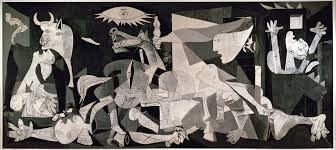
Pablo Picasso's "Guernica"-  The Power of Art with Simon Schama

 The Power of Art Simon Schama

The Third Reich:  Hitler's Rise to Power

 The Third Reich Hitlers Rise

WORLD WAR II VIDEOS:

Crash Course World War II

 Crash Course World War II

War of the World Episode 2- The Plan (Niall Ferguson)

 War of the World Part 2

War of the World Episode 3- Killing Space

 war of the world part 3

World History AP Video Questions: War of the World, Part 3 “Killing Space” 
-Answer the following based on the video above by Friday April 4th, 2014
War of the World, by Niall Ferguson. Part 3 - “Killing Space.” Episode Synopsis: How the rise of the Axis powers led to a fundamental redrawing of the world map. He pinpoints 1942 as a pivotal year, and considers how the 20th century might have unfolded had World War Two ended differently, with totalitarian regimes dividing the globe between them.
Series Summary: Controversial historian Professor Niall Ferguson argues that in the last century there were not in fact two World Wars and a Cold War, but a single Hundred Years' War. It was not nationalism that powered the conflicts of the century, but empires. It was not ideologies of class or the advent of socialism driving the century, but race. Ultimately, ethnic conflict underpinned 20th-century violence. Finally, it was not the west that triumphed as the century progressed - in fact, power slowly and steadily migrated towards the new empires of the East.
1. What is Lebensraum?
2. What was the year that the world seemed to teeter on a knife’s edge?
3. Who did Japan attack first in World War II during the “Rape of Nanjing” in 1937?
4. How did the Japanese media cover the killing of those in Nanjing?
5. What did the Japanese think of the Chinese?
6. What was “perhaps the most striking feature of the attack on China?”
7. What was the Japanese War Tribunals findings about the leader of the attack, General Matsui? Guilty or Innocent?
--Break & Beginning of the Bombardment of Poland by Germany--
8. An army of ___ million men advanced from Germany into Poland.
9. In the West, France retained it’s national identity and was given a measure of ‘respect’ by the Germans. But, in the East,
the Polish were treated... the same or worse?
10. Hitler had a planning center in the mountains at Berchtesgaden which was nicknamed Hitler's ________.
11. What was the purpose of the design and construction of the Autobahn freeway after the invasion of Poland?
12. What did Himmler decide to do with the new Lebensraum that was taken in Poland?
13. What did the Germans do to the Jews who lived in Poland?
14. What happened to Polish priests, lawyers, teachers, boy scouts and girl guides?
15. What did the “Brown Sisters” offer to Polish ‘Aryan-looking’ children?
--Break & Beginning of Soviet controlled Poland after weird Joseph Stalin ghost peeks in at Niall in his car--
16. Who did Hitler agree to a pact with to carve up Poland?
17. By 1942, nearly 1⁄2 of all the Poles Stalin had deported were _____.
18. What was Hitler’s 50th birthday present located in Obersalzberg, German?
19. What was Operation Barbarossa?
--Break & Beginning of Hitler’s Final Solution Implementation--
20. On the eve of Barbarossa, what did Hitler make clear about how the Germans should treat Russian soldiers?
21. In a quarry in a nearby forest, what did the Germans do to the Polish Jews not deemed fit enough for ‘work’?
22. What does Niall Ferguson believe was a compelling reason for the killing of Jews in Poland? (choices: anti-semites? or
did they suppress the knowledge that they knew they were doing wrong? or was it just self-preservation?)
23. Who killed the Jews of Jedwabne?
24. What did Asian nationalists believe the Japanese were?

War of the World Part 4- Tainted Victory

 War of the World Tainted Victory

Inside World War II- 2 hour comprehensive look at the destructive nature of the war

 Inside World War II

Surviving D-Day-  90 minute look at what it must have been like

 Surviving D-Day

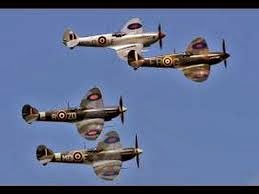
The Battle of Britain- The Real Story

 The Battle of Britain The Real Story

Tora! Tora! Tora! The Real Story of Pearl Harbor

 Tora Tora Tora The Real Story of Pearl Harbor


20th Century Battlefields- Stalingrad
 20th Century Battlefields Stalingrad